GROUPED SOIL-CARBON PROJECT · REGENERATIVE SHEEP RANCHING · MESETA DE SOMUNCURÁ, LÍNEA SUR, RÍO NEGRO
Guardianes de la Estepa Patagónica
This grouped regenerative sheep-ranching project on the Meseta de Somuncurá covers 13 establishments and 60,765 hectares of Patagonian steppe. It is organized into four quantification units with the aim of certifying soil carbon under the Verra VCS standard, methodology VM0042, and of achieving community and biodiversity benefits under the CCB Standards.


The project is under development and has no credits issued or available.
▸ Environmental Feasibility Authorization granted by Río Negro's Secretariat of Environment and Climate Change on June 10, 2026, backed by a prior technical opinion.
A grouped project, not a single field
Guardianes brings together sheep producers from the Línea Sur under one shared system of implementation, monitoring and commercialization. Each establishment keeps its own management and its own decision to participate; what is shared is the baseline, the measurement protocol, the governance and the market access — none of which any single producer could reach alone at this scale.
13
Participating establishments
20
Years of expected crediting period
The crediting period is the one anticipated in the project design and has not yet been fixed with the registry.
Do you have a field in the Línea Sur and want to know if it qualifies?
Check eligibilityThe project is developed on the Meseta de Somuncurá
The Meseta de Somuncurá is a basaltic plateau in extra-Andean Patagonia, shared between Río Negro and Chubut, covering roughly 2.5 million hectares. It is arid to semi-arid steppe between 800 and 1,400 meters in elevation, with 150 to 300 millimeters of annual rainfall, where mallines — valley-bottom wetlands and bogs — concentrate the water, productivity and biodiversity of the region on just 3 to 5% of its surface. All of these photos come from the project's own field campaigns: none are stock or archive images.
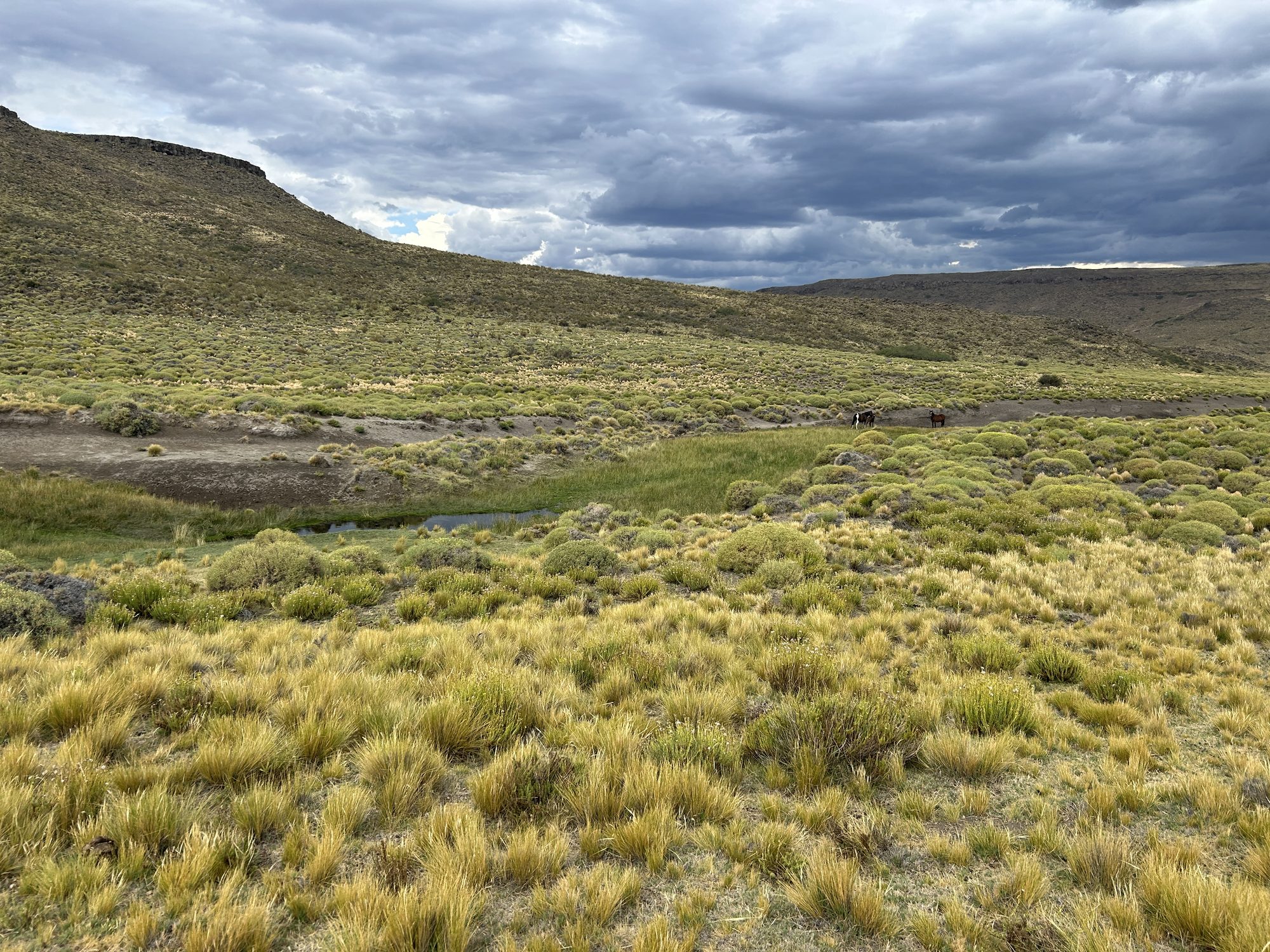
Mallín and valley · Línea Sur, Río Negro · February 2026
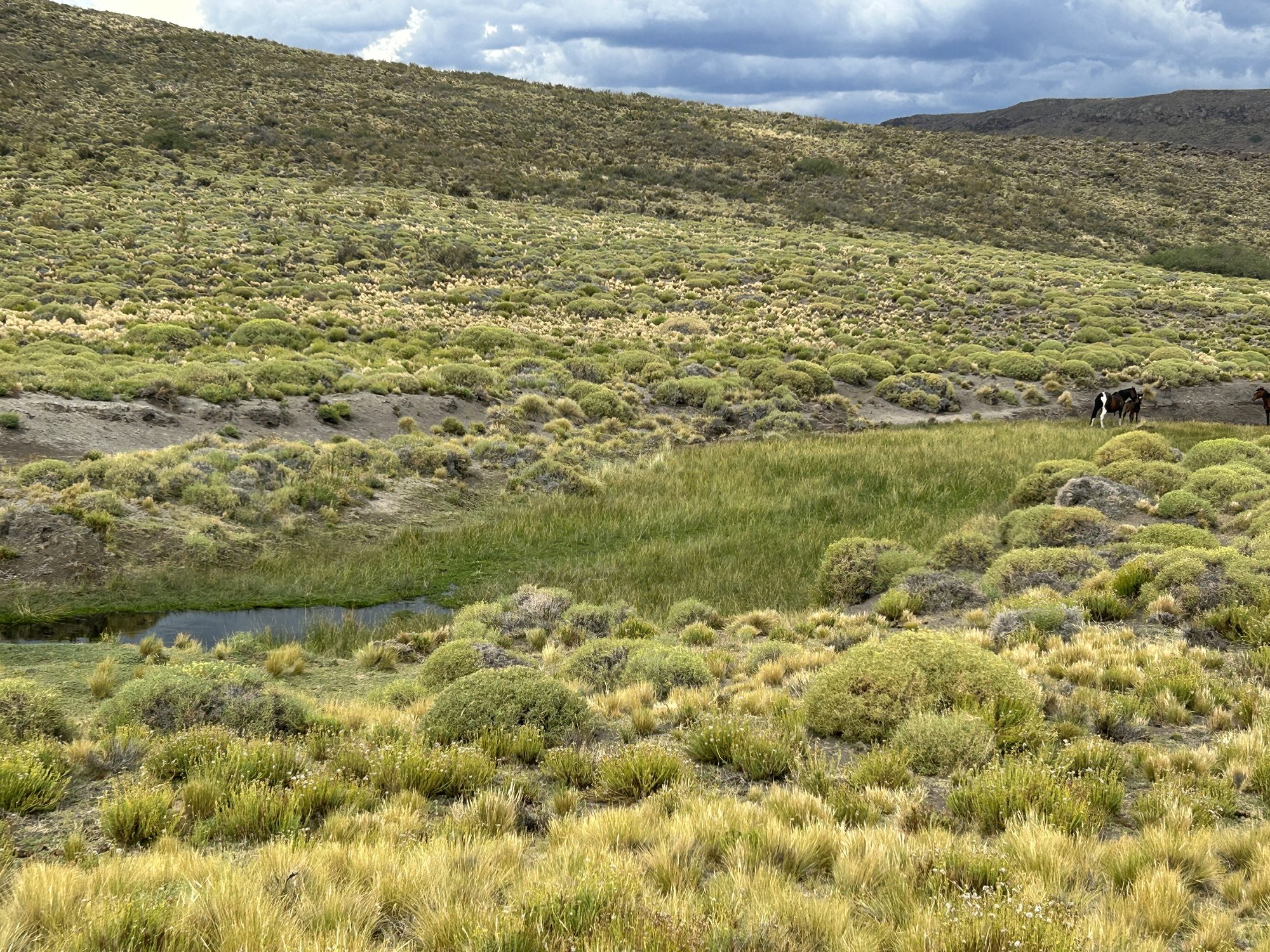
Open grassland · February 2026
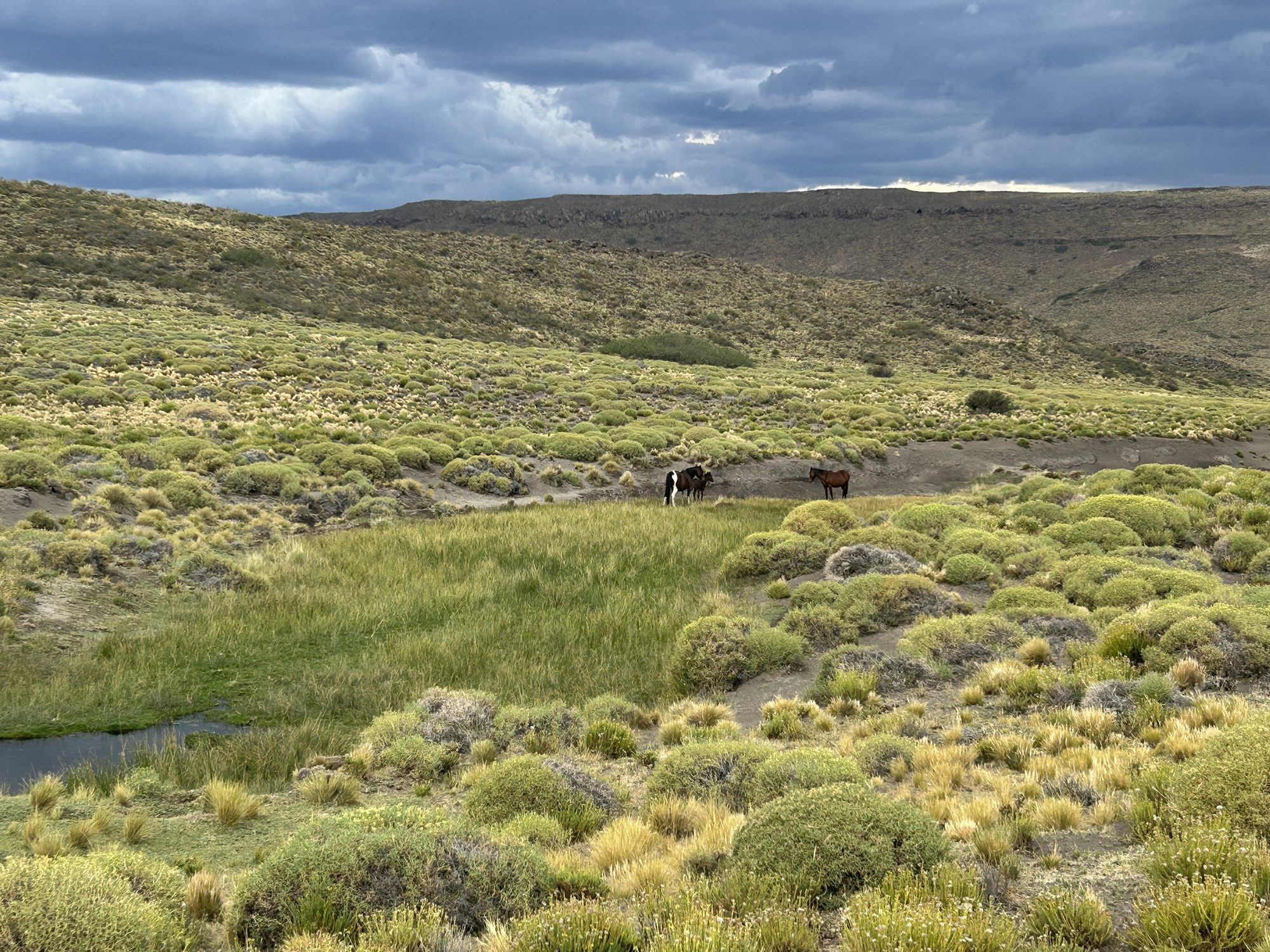
Mallín with livestock in the distance · February 2026
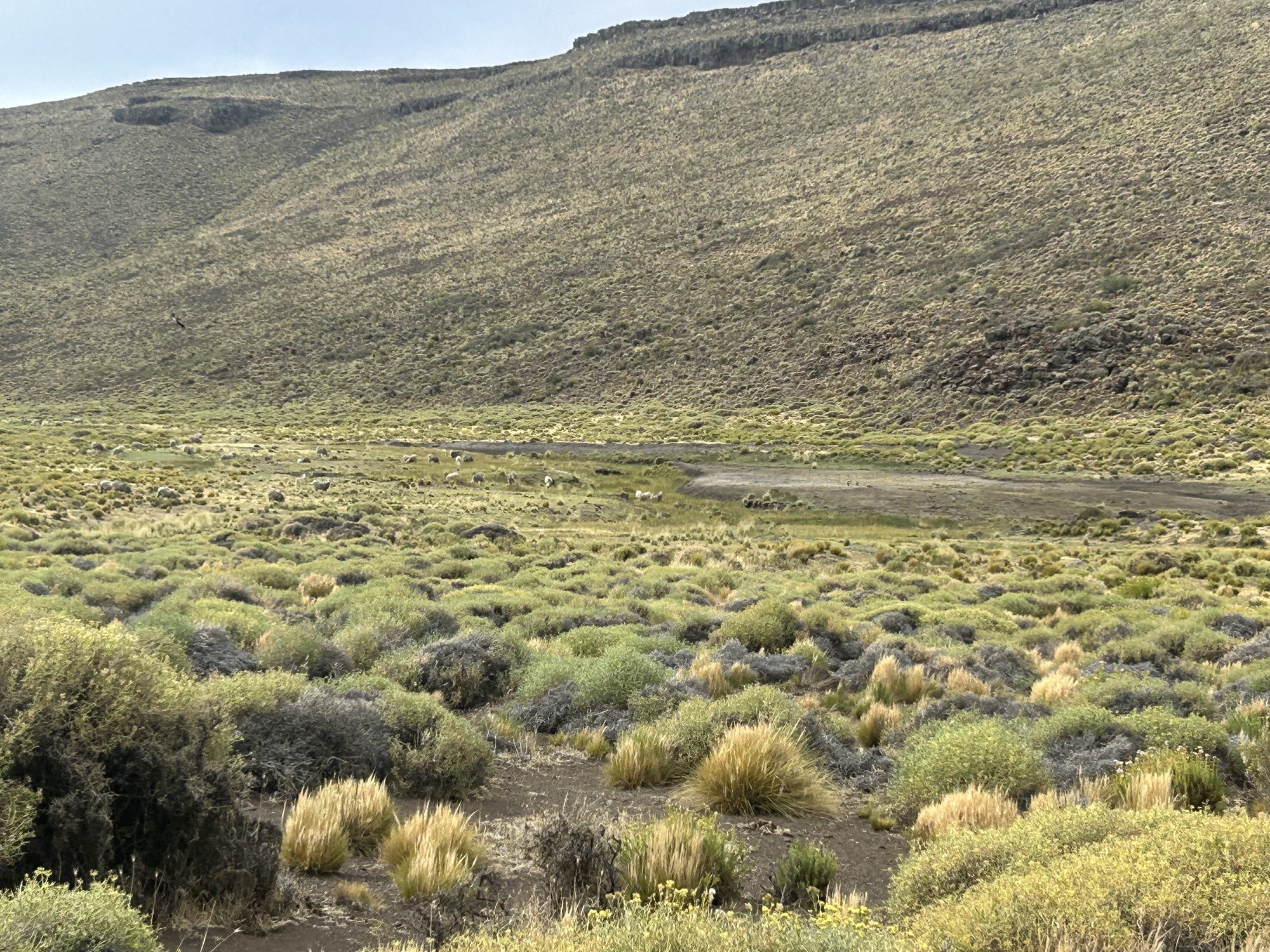
Shrub steppe · February 2026
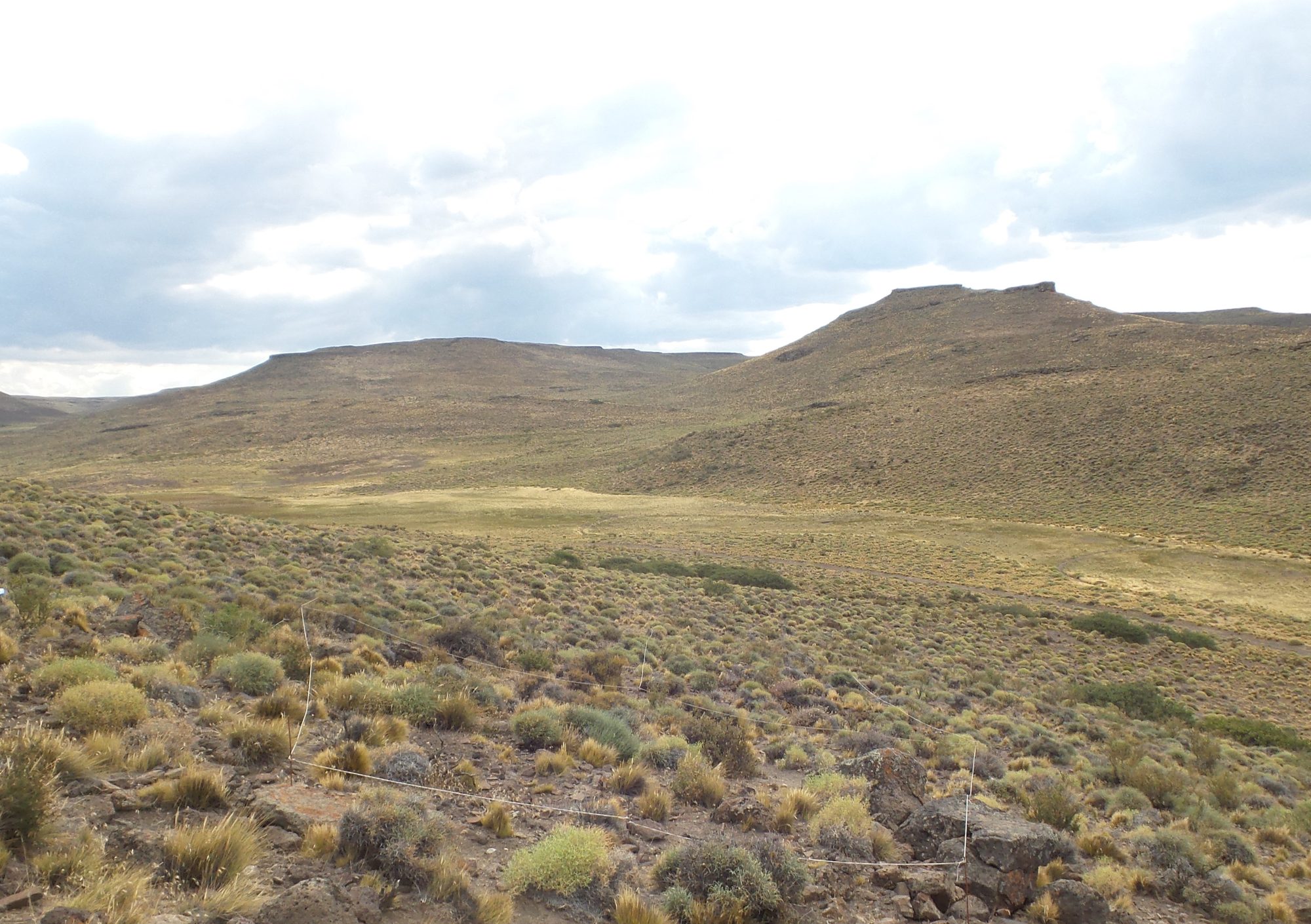
Plateau and horizon · February 2026
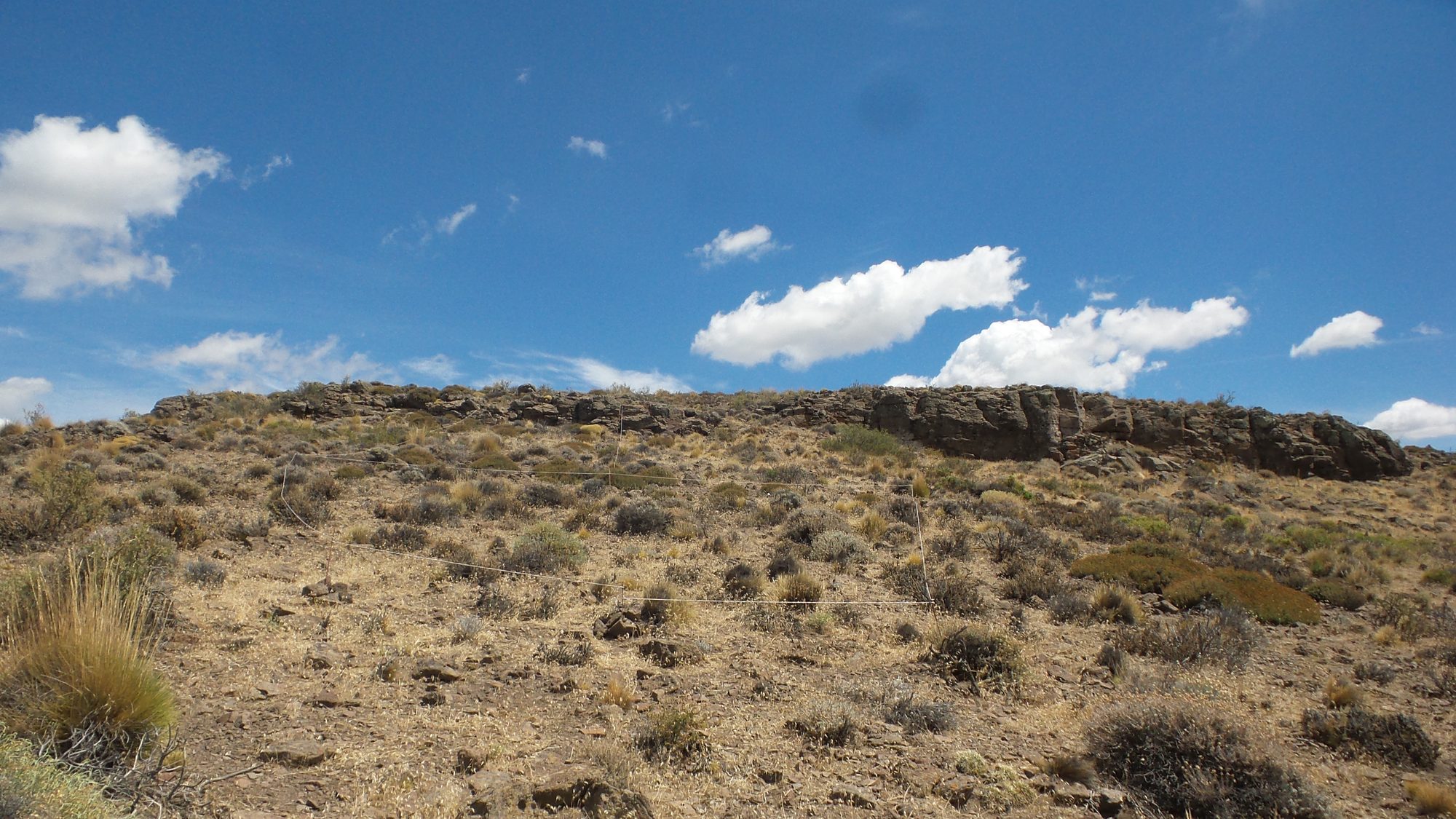
Basaltic hill · February 2026
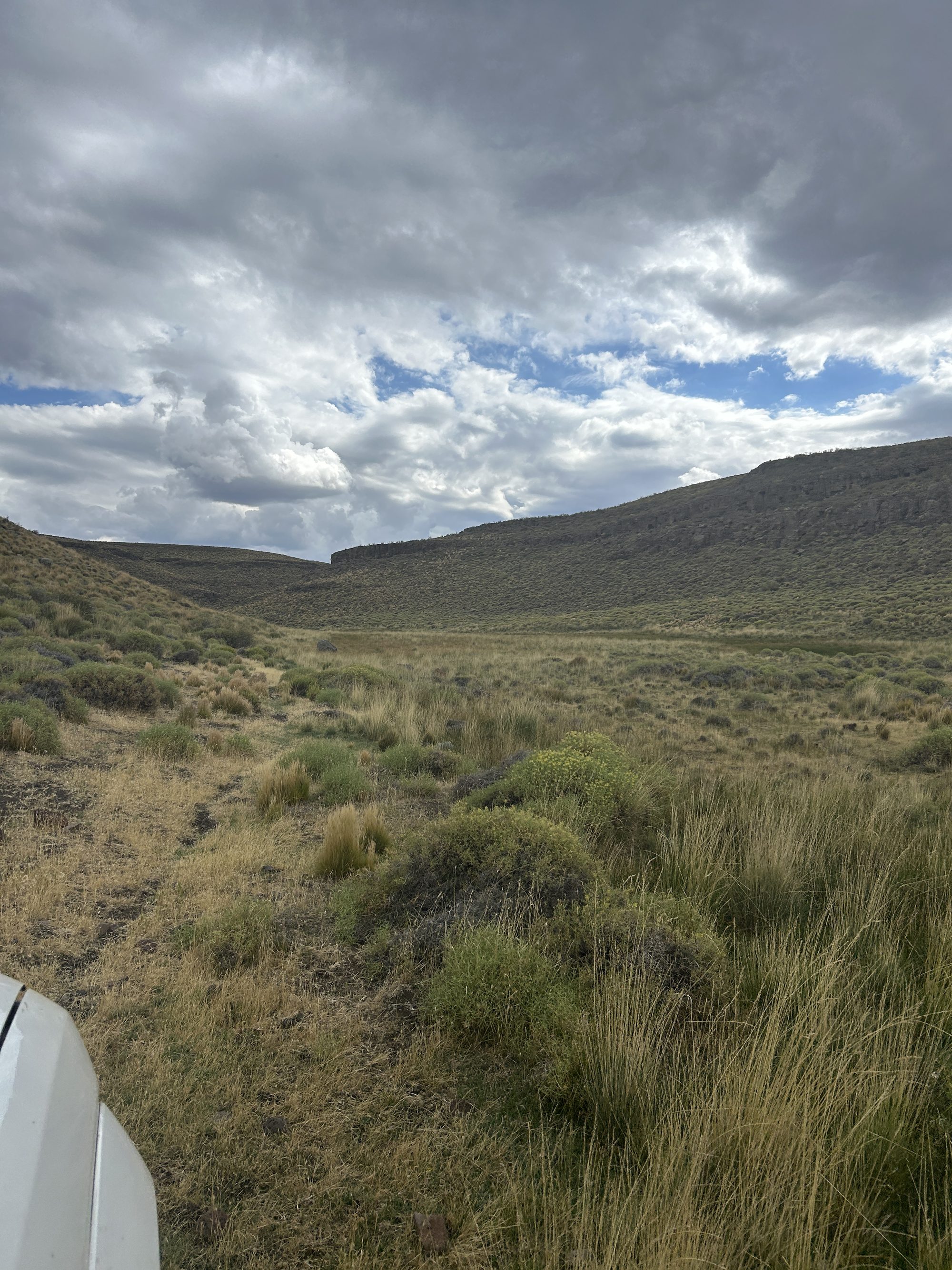
Rolling steppe under storm clouds · February 2026
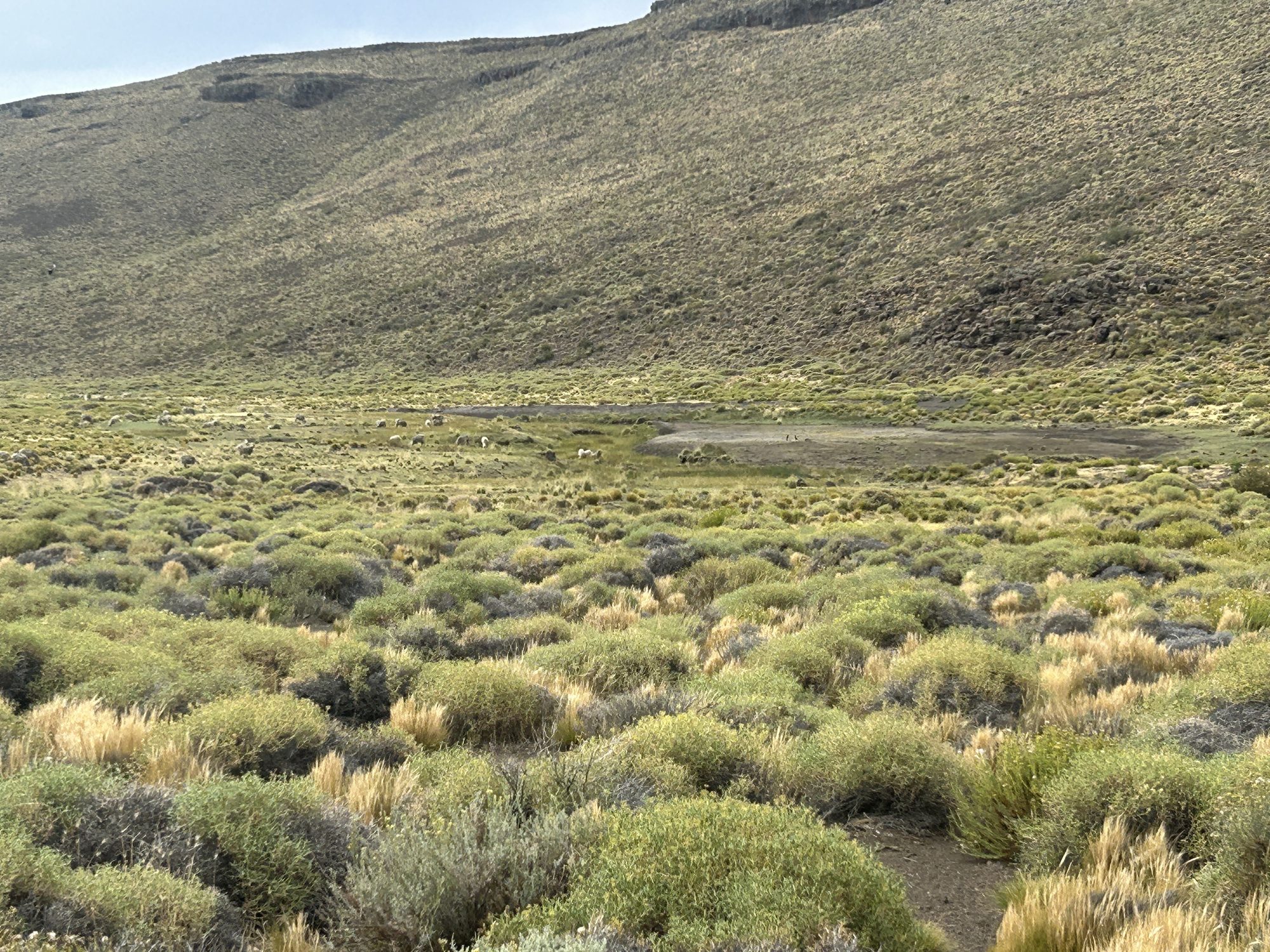
Coirón-covered slope · February 2026
Photographs: ForestBlock / ENTE Región Sur team. Field campaigns in the Línea Sur, Río Negro, January–February 2026. No coordinates or establishment-identifying data are published.
Three things you can verify today
Environmental feasibility
Granted by Río Negro's Secretariat of Environment and Climate Change on June 10, 2026, with a prior technical opinion, within the Meseta de Somuncurá Protected Natural Area.
Project stage
Pre-listing: not listed, not validated, not verified, and no credits issued or available.
Open registry
The project keeps an open registry of points still unresolved — area, FPIC, benefit sharing, among others — detailed in the full technical dossier.
Which standard it's certifying under, and what stage it's at
The project is structured to certify under Verra's Verified Carbon Standard with methodology VM0042, which quantifies the change in soil organic carbon from improved management of grazing lands, and to seek validation under the CCB Standards, which assess net benefits for climate, community and biodiversity. None of this has been achieved yet: this is what exists and what's still missing.
Target standard
Verra VCS — VM0042 Methodology
Target standard
CCB — Climate, Community & Biodiversity Standards
These names identify the standard and methodology the project is pursuing. They are not certification seals: the project is not listed, registered, validated or verified, and has no credits issued or available.
Target standard and methodology
Verra VCS with methodology VM0042 for soil carbon in grazing systems. The methodology has been selected; the Project Description is in preparation.
CCB standard
CCB is a design objective of the project, with validation planned for the corresponding stage. No CCB validation has been obtained, and no CCB label applies to any credit.
Current stage
Under development, prior to listing. Soil and vegetation baseline underway; no validation, no verification, and no credits issued.
Credit delivery can only occur after implementation, independent verification and the corresponding issuance. Any volume discussed at this stage is indicative and subject to performance, validation, verification, risk buffer and contractual conditions.
The CCB approach: the social component isn't an appendix
Most carbon projects treat the social dimension as an appendix to the tonnage calculation. The CCB Standards reverse that logic: they require demonstrating net benefits for communities and for biodiversity, held to the same evidentiary standard as climate. That's why the project is designed from the outset around the people who live and work in this territory.
Indigenous peoples
The project works with the Mapuche community of Nazario Chico, from Maquinchao, recognized by Río Negro's CODECI and with an ancestral presence in the Línea Sur. These are sheep-ranching families: the relationship is productive and territorial, not symbolic.
Free, prior and informed consent
The FPIC process, under ILO Convention 169 and Law 26.160, is underway. It is not closed, and while it remains open the project does not publish images of the community or claim its adherence.
Benefit sharing
The operating principle is that a substantial share of the value generated reaches those who implement and sustain the restoration work. The final formula will be published as a benefit-sharing policy before producers are onboarded: percentages still under negotiation are not published.
The project has a grievance mechanism open to any person or organization in the territory, with a formal response. Its design is finished; it has not yet been declared operational.
Biodiversity: why this place is irreplaceable
Somuncurá is a Key Biodiversity Area (KBA) and an Alliance for Zero Extinction (AZE) site — the designation given to the last known refuge of a species facing extinction. The plateau's isolation produced a set of endemic species found nowhere else on the planet.
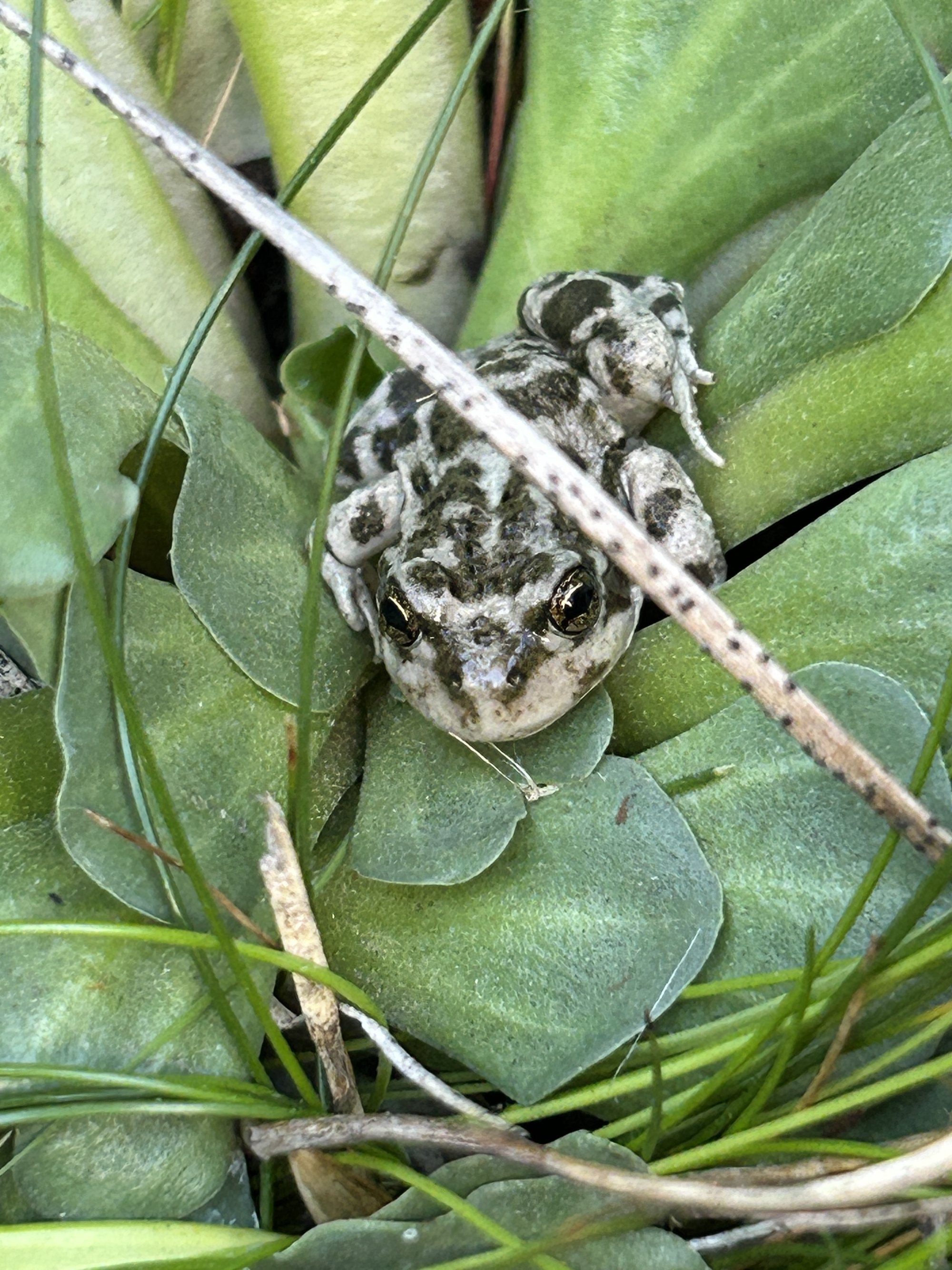
Valcheta frog · Meseta de Somuncurá · December 2025
Valcheta frog — Pleurodema somuncurense
Also known as the Somuncurá frog. It is a strict endemic amphibian of this plateau: its entire known population worldwide lives in the thermal springs of the Valcheta stream system, waters that emerge from volcanic rock at a constant temperature. It is listed as Critically Endangered by the IUCN and is one of the trigger species for which the site was designated an AZE site. If it disappears from there, it disappears from the planet.
Among the documented threats to the species, three are ranching practices: trampling and erosion of riparian vegetation, channeling of the springs, and burning grassland to force regrowth. We say this plainly because it's exactly the point: the regenerative management the project proposes — rest periods, stocking-rate adjustment, exclusion of critical riparian areas and an explicit ban on burning — is designed to reduce those same pressures. This is a design hypothesis, not a demonstrated benefit: it requires a baseline, indicators and measurement, and that work is still underway.
IUCN category
Critically Endangered (CR), 2016 global assessment
Distribution
Strict endemic of the Valcheta system, Meseta de Somuncurá
Site status
KBA and AZE — holds the species' entire known population
Relationship to the project
The spatial overlap between the establishments and the species' habitat is documented. This is a site-level fact, not a claim about the species' presence on the project's specific fields.
What the team observed in the field
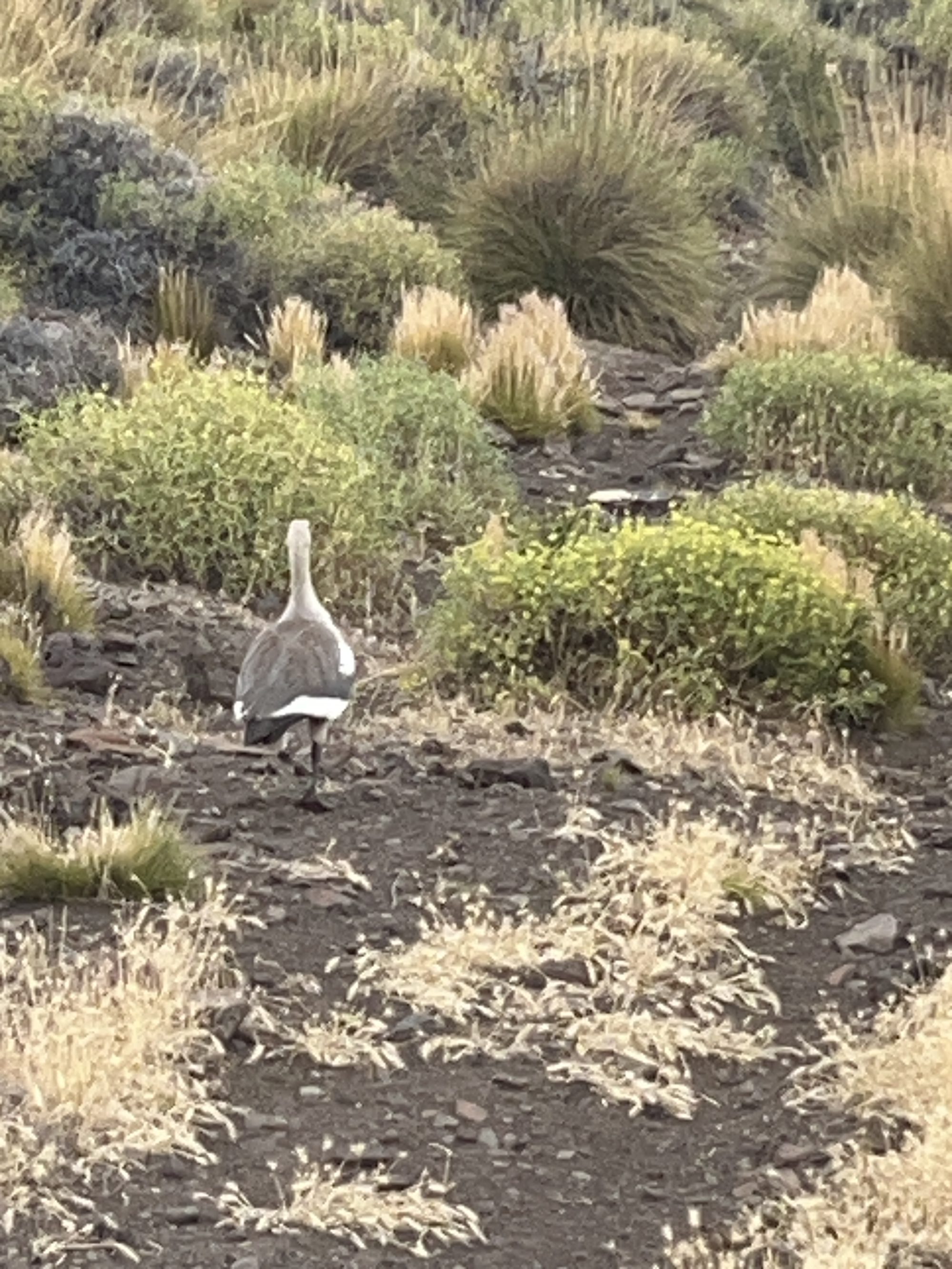
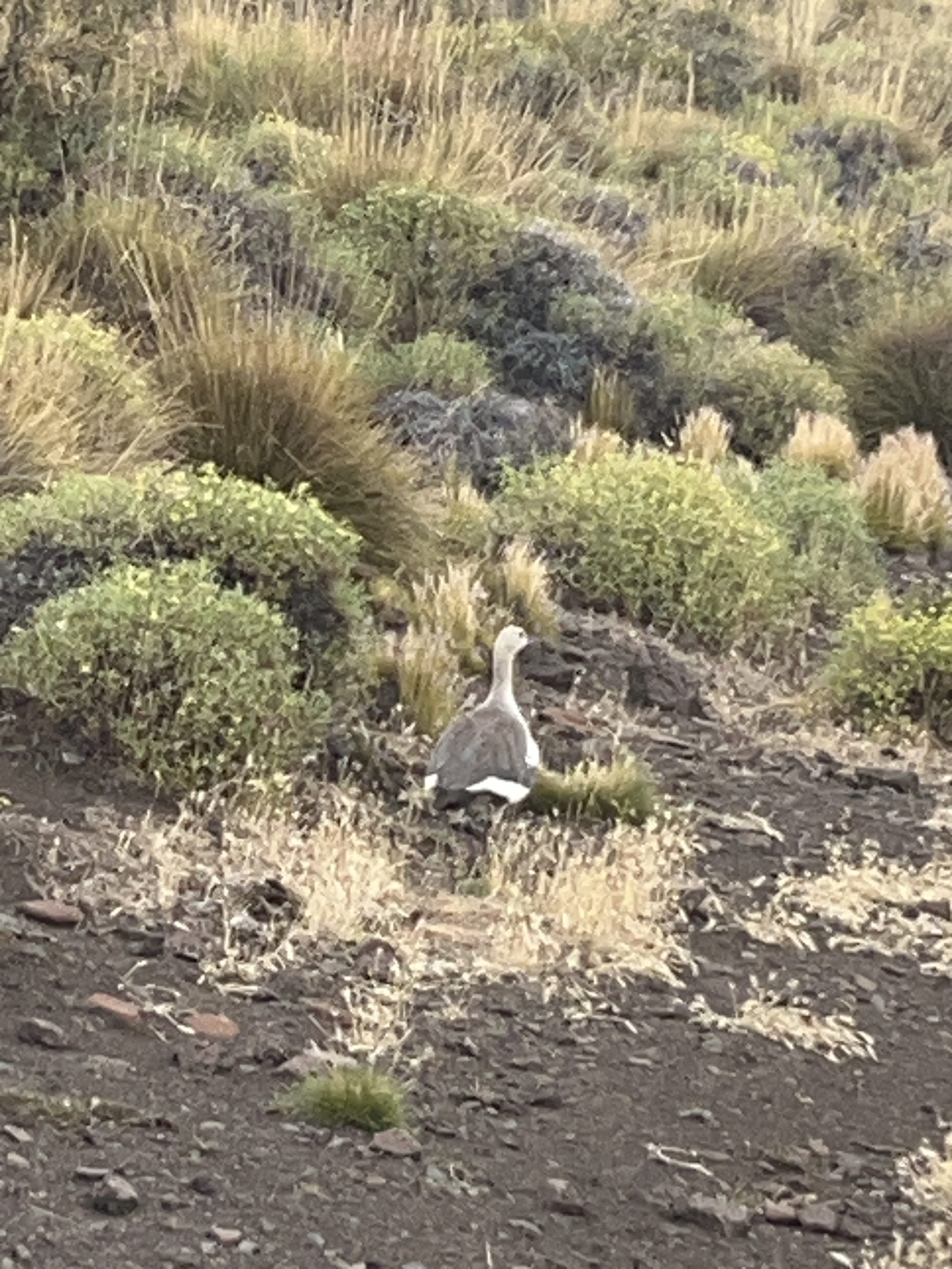
Field observations, Línea Sur, Río Negro, February 2026. Species identification has not been confirmed by a specialist, which is why the scientific name is not published.
How it's measured, in practice
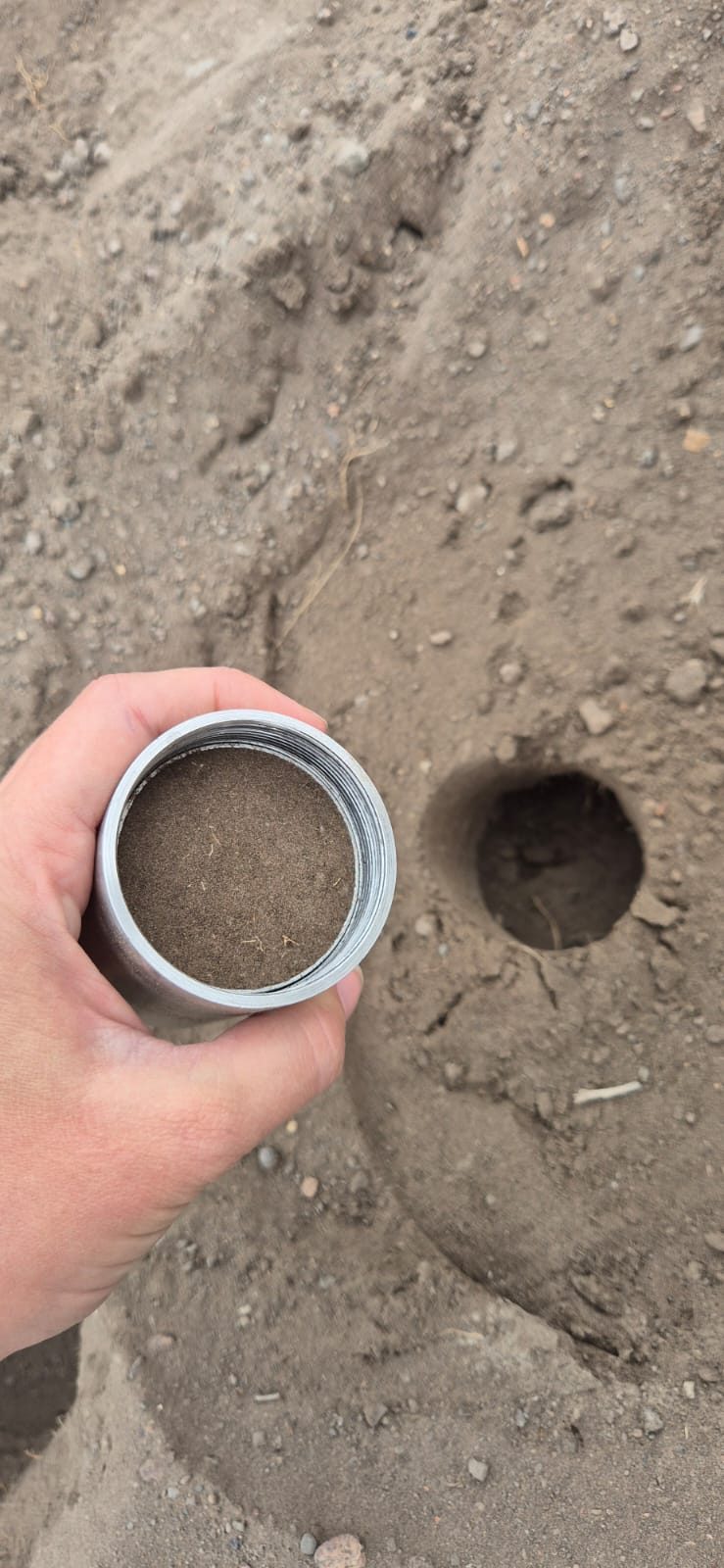
Soil carbon isn't estimated from a desk. These are the baseline field tasks: auger sampling, sampling by horizon, vegetation sampling frames and transects. Samples go to the laboratory; results are not yet verified by an independent body.
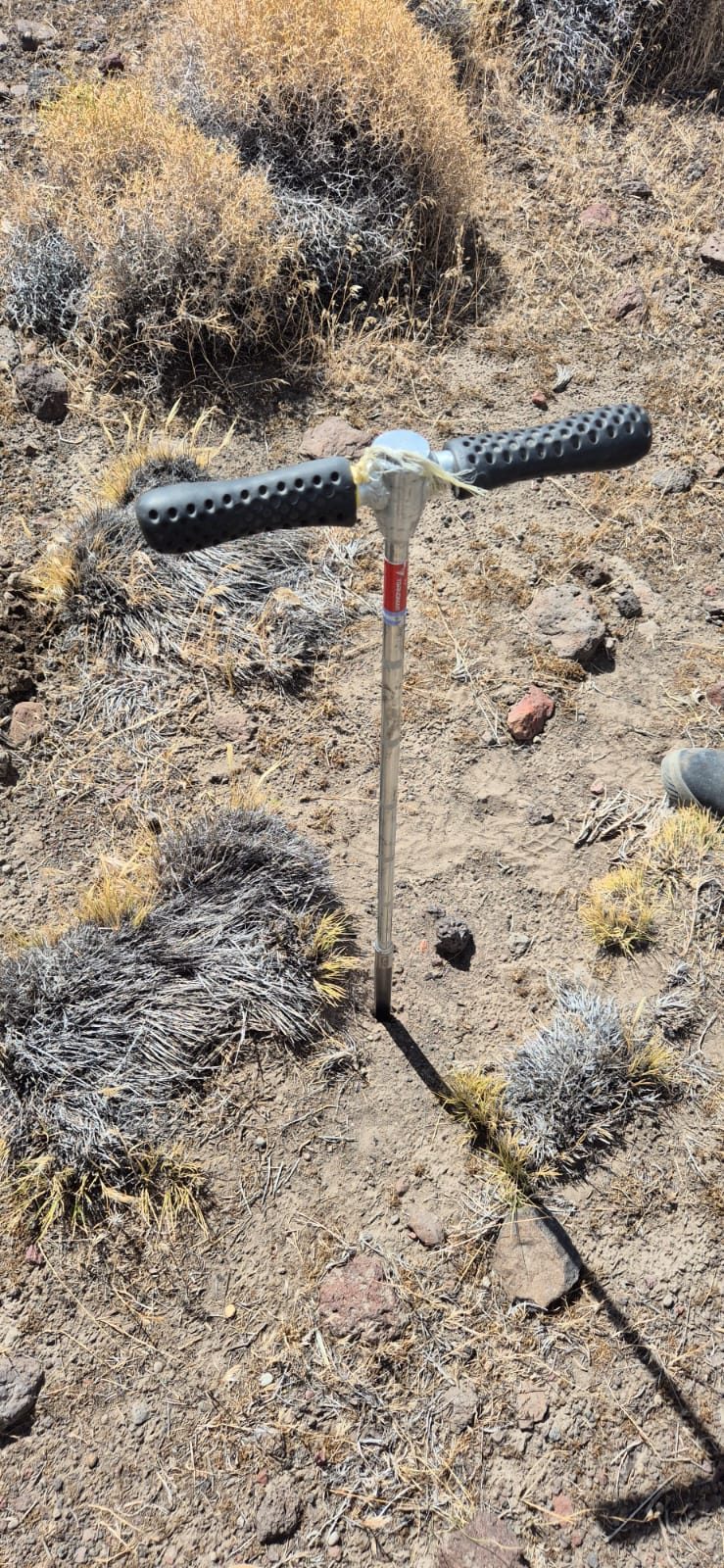
Auger at sampling point · February 2026
Soil sample by horizon · February 2026
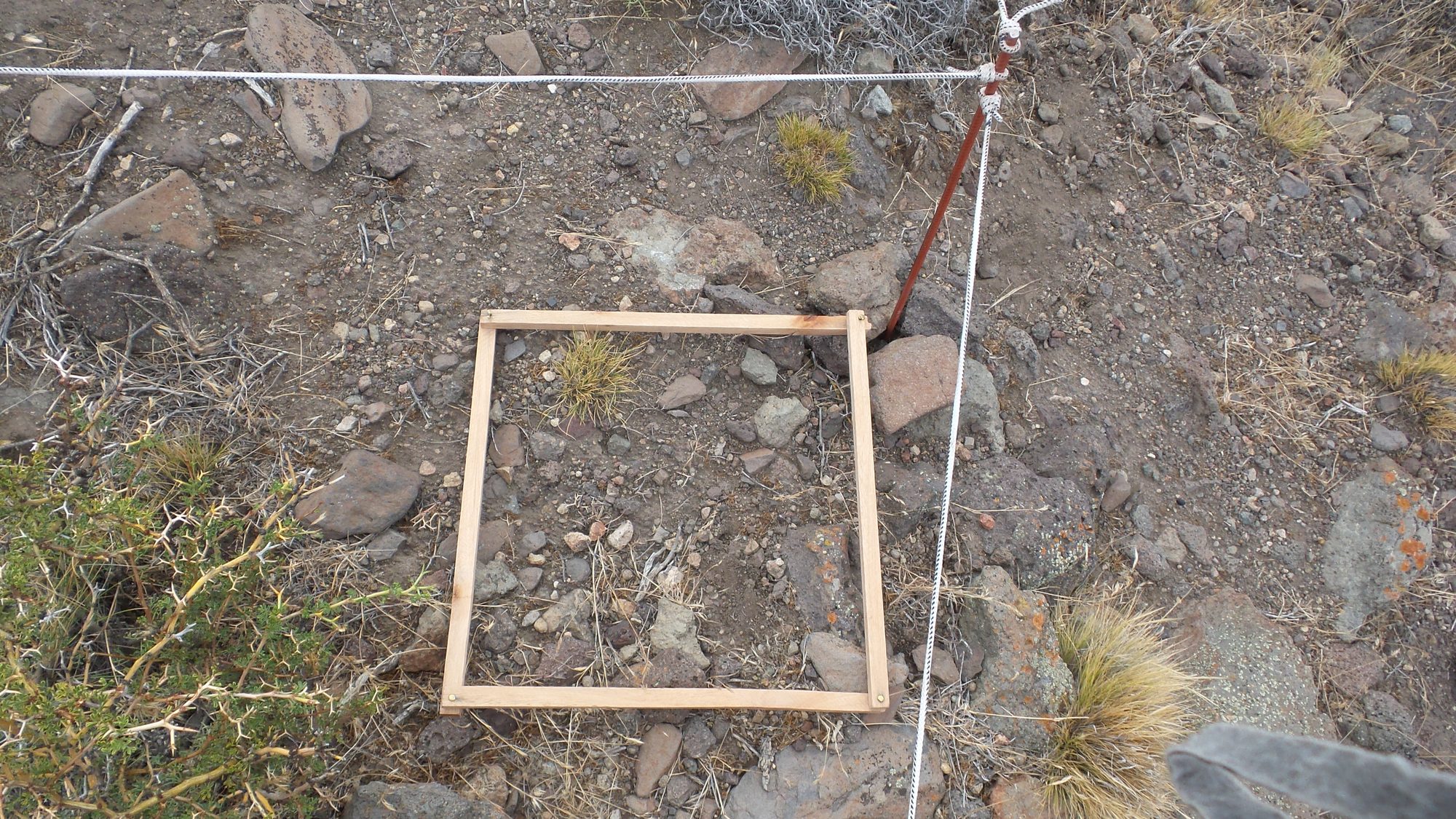
Vegetation sampling frame · February 2026
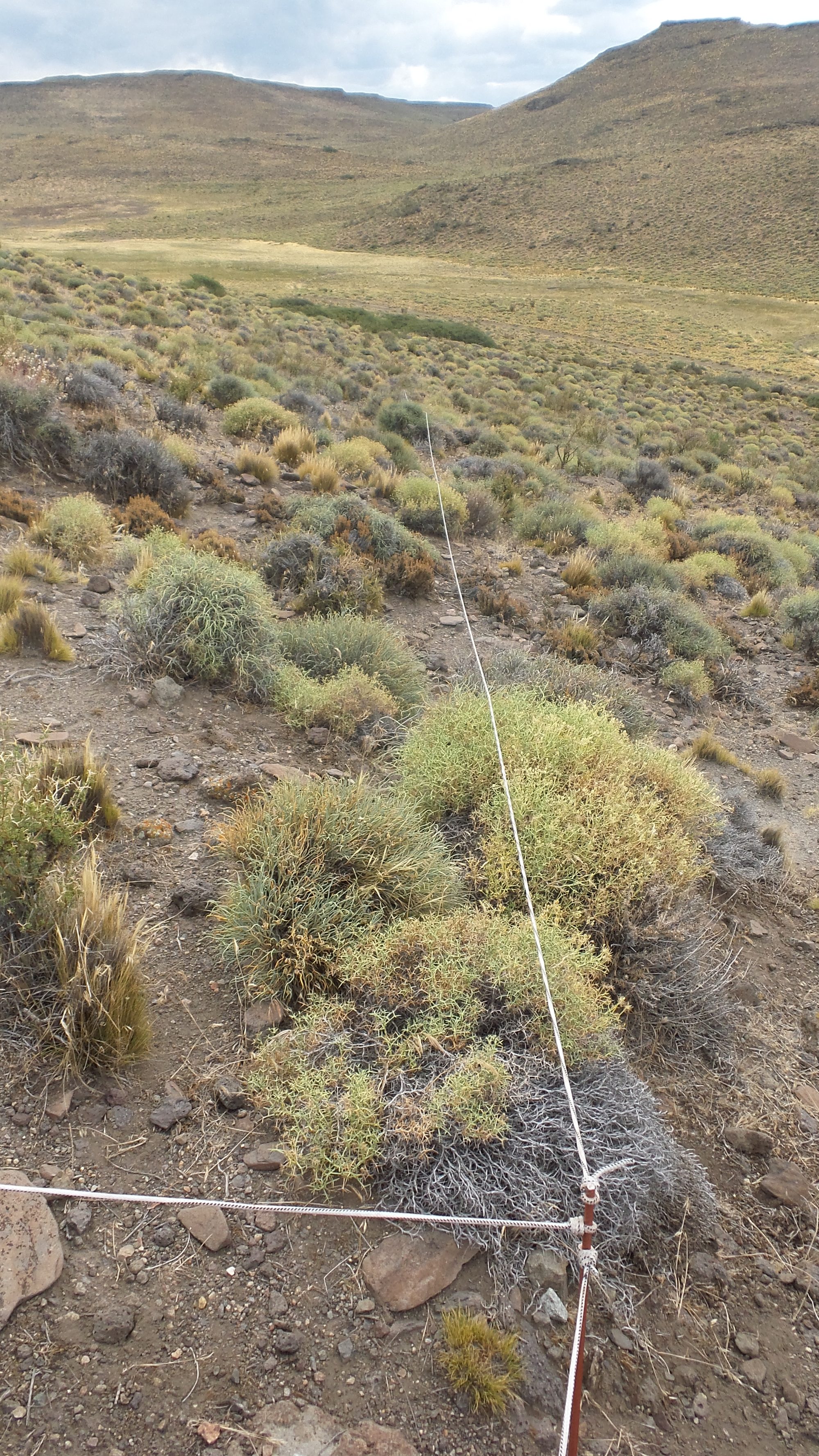
Survey transect · February 2026
Soil and vegetation sampling campaign, Línea Sur, Río Negro, January–February 2026. Soil carbon values are in process: no figures are published until laboratory analysis and its review are complete.
Who's in the field
The survey work is carried out by a technical team that visits the establishments together with the producers. These photos are published with the consent of the people shown in them.
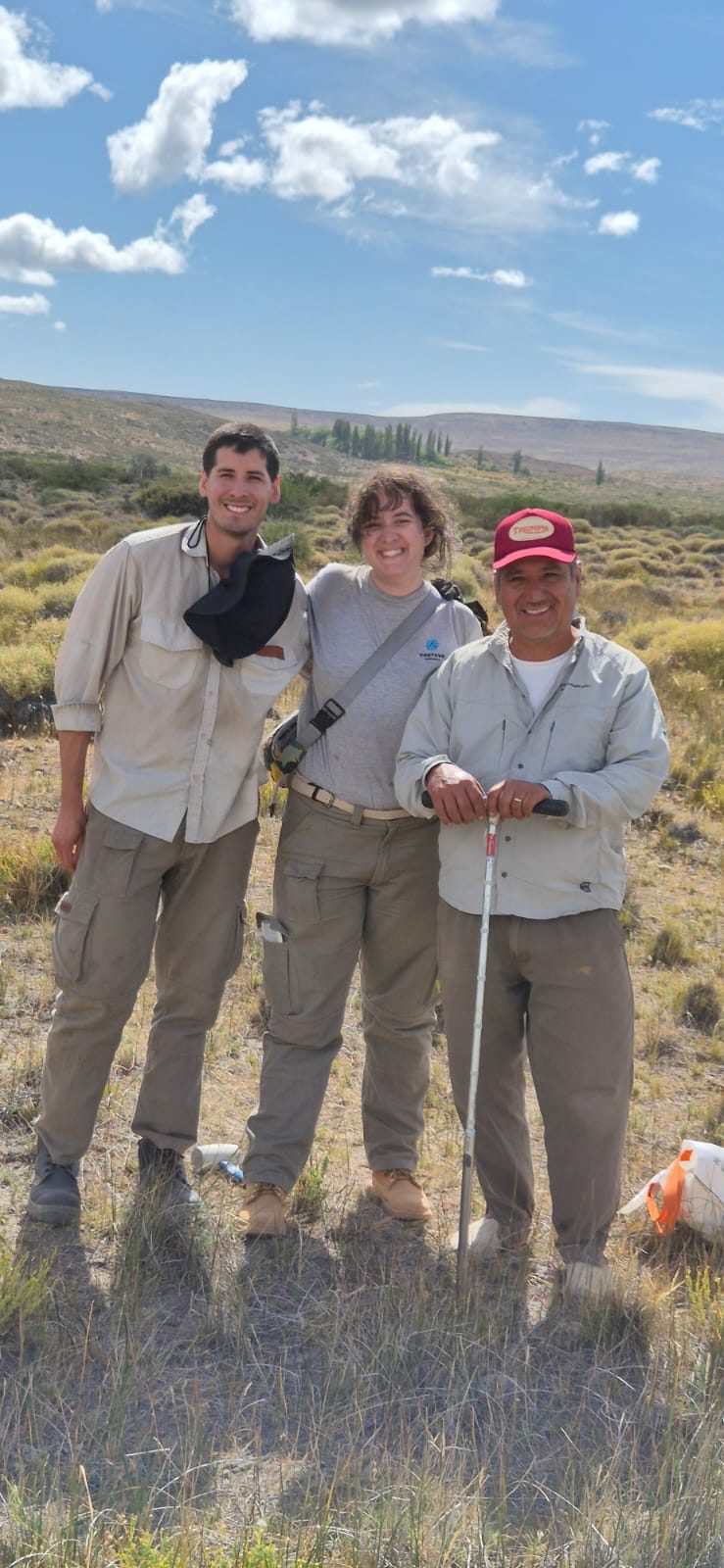
Survey team · February 2026
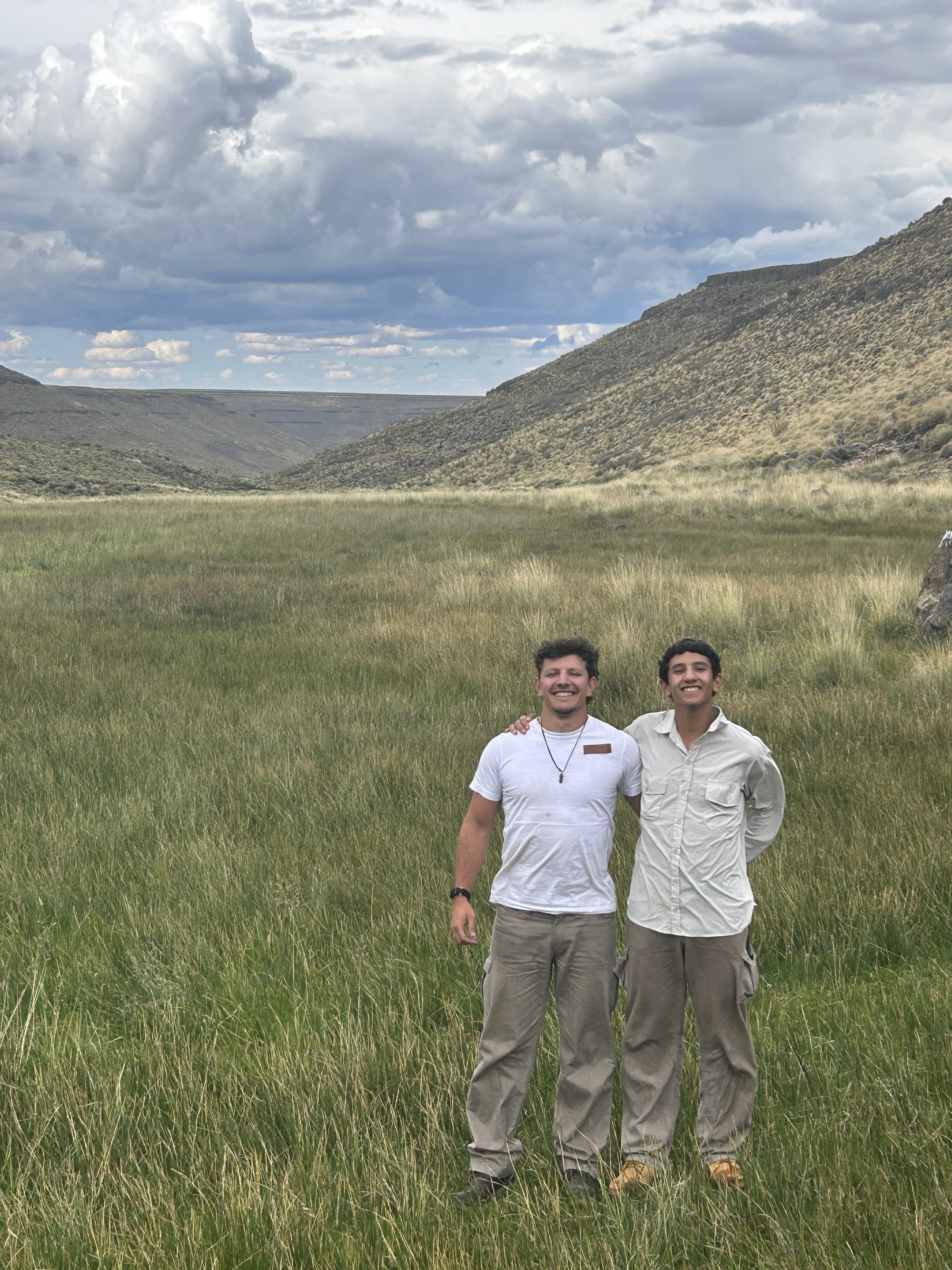
Mallín site visit · February 2026
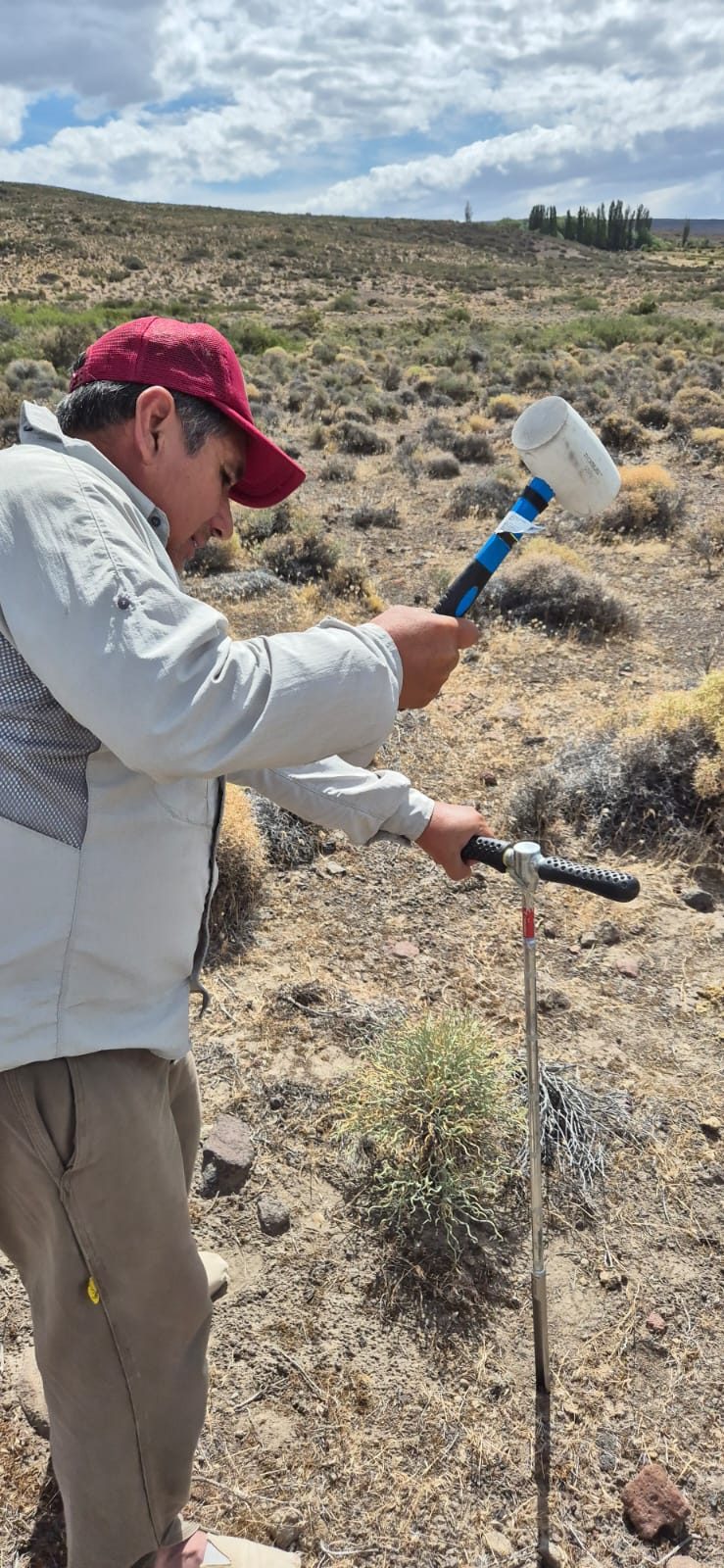
Soil sampling in the field · February 2026
Who supports the project
A grouped project in the Línea Sur can't hold up without two things at once: the technical capacity to meet an international standard, and the territorial legitimacy for producers to open the gate. Guardianes combines both.
ENTE Región Sur: the piece that makes the project possible
The Ente para el Desarrollo de la Línea y Región Sur is the public agency of the Province of Río Negro that has worked with producers in this region for decades. It is Guardianes' institutional sponsor, and its involvement is not ceremonial: it is the condition that makes a grouped project at this scale viable.
ENTE brings what no developer can buy. It knows the producers by name and has years of relationship with them, which makes it possible to bring together 13 establishments without the project being seen as an outside actor. Its technical team carries out the fieldwork — establishment forms, body condition scoring, grassland monitoring — with professional criteria and continuity over time. And as a provincial agency, it anchors the project in Río Negro's public institutions, which matters both for environmental processing and for the confidence of a buyer assessing social risk and permanence.
ForestBlock brings the counterpart: methodological design under VM0042, MRV infrastructure with remote sensing and field evidence, documentation management vis-à-vis the standard, and commercial structuring. MJM Energía acts as Project Developer and PMO; Shale Synergy S.A. is the Project Proponent before the registry.